
Physical Training for
People with Dementia in
Confined Mental Health Units
In recent years, there has been growing interest in designing non-pharmacological interventions to improve the quality of life for People with Dementia (PwD) who face motor impairments. Several interventions who have led to multiple publications investigates the feasibility of using Virtual Reality (VR) technologies for the rehabilitation of patients with moderate to severe dementia residing in a confined psychiatric hospital and discusses the impact of this interactions on motor training. The issues encountered during the design, testing and execution of the experimental tasks are discussed and a set of guidelines and recommendations for the future deployment of VR in healthcare services is provided.
Sampling Electrocardiography Confirmation for a Virtual Reality Pain Management Tool
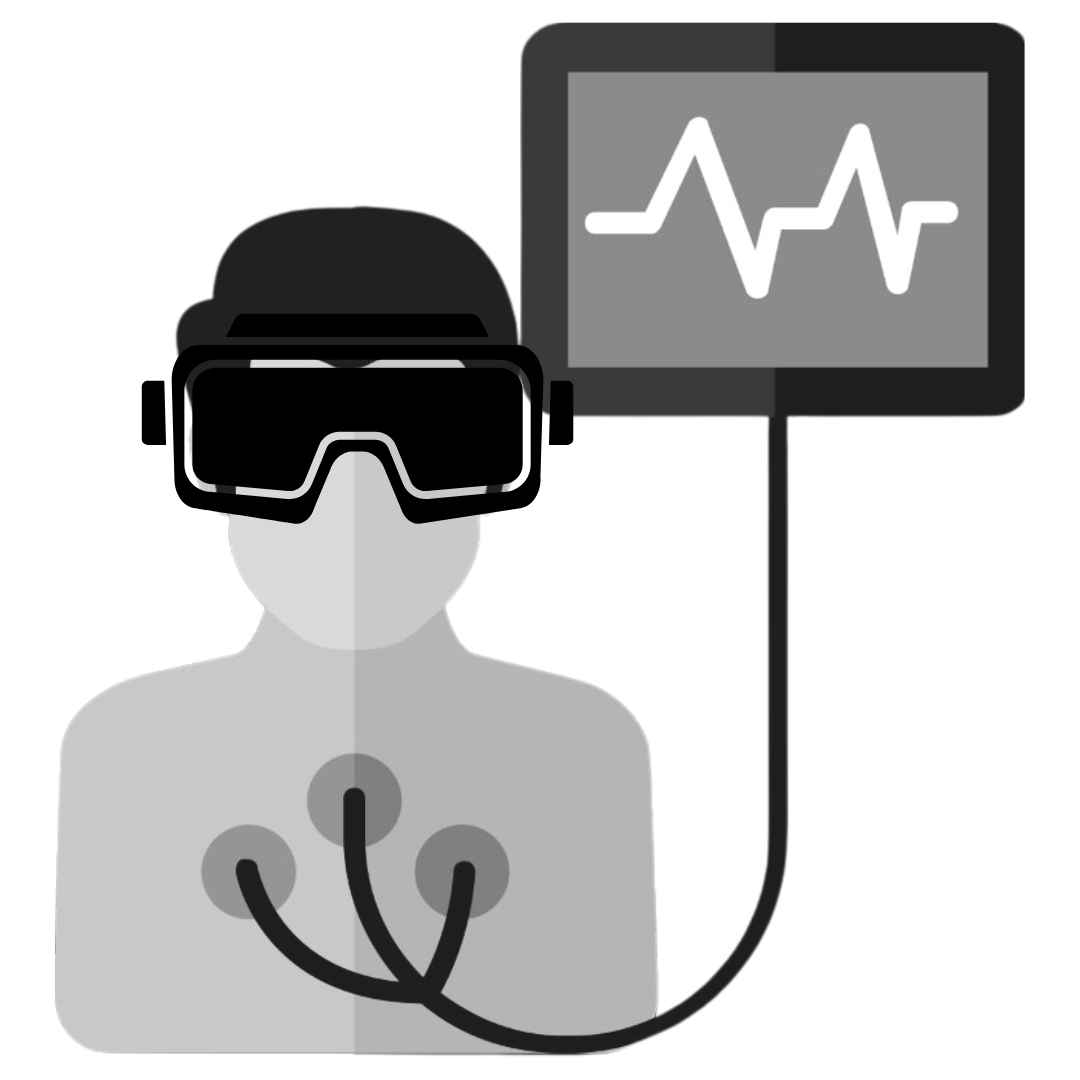
Previous research has shown that Virtual Reality (VR) technology may provide an alternative solution to pain management for clinical applications based on some psychological intervention strategies. Additional research has suggested that Electrocardiography (ECG) can be an objective measure of pain, with evidence showing that as pain increases, ECG signals should also increase. The aim of this study is to examine the effect of VR on naturally occurring pain when no pharmacological analgesics nor psychological intervention strategies are applied. The above statement will be validated via physiological responses, such as ECG and a correlation between subjective and objective measurements of pain will be made. The findings of the present study extend our understanding of the physiological and psychological effects of VR, providing useful insights into the relationship of VR and the levels of pain and discomfort caused by an exhaustive single limb muscle contraction. The main conclusion reached is that the use of VR can reduce physiological and psychological responses associated with negative sensations. Specifically, the results suggested that VR technology can significantly reduce ECG by 6 bmp, and perceived pain and exertion up to 50%, it can also significantly increase pain tolerance up to three minutes, without the use of any pharmacological analgesics and psychological intervention strategies.