
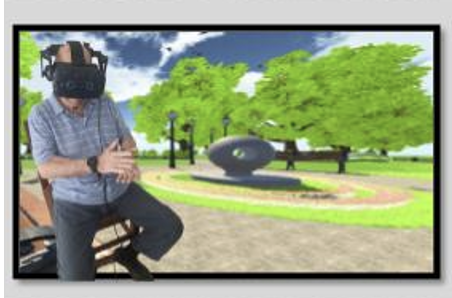

Research has suggested that institutionalization can increase the behavioral and psychological symptoms of dementia. To date, recent studies have reported a growing number of successful deployments of virtual reality for people with dementia to alleviate behavioral and psychological symptoms of dementia and improve quality of life. However, virtual reality has yet to be rigorously evaluated, since the findings are still in their infancy, with nonstatistically significant and inconclusive results. Unlike prior works, to overcome limitations in the current literature, our virtual reality system was co-designed with people with dementia and experts in dementia care and was evaluated with a larger population of patients with mild to severe cases of dementia. Working with hundreds of patients with dementia and medical experts, we co-designed a virtual reality system to enhance the symptom management of in-patients with dementia residing in long-term care. According to our findings, virtual reality contributes significantly to the reduction of behavioral and psychological symptoms of dementia, especially for aggressive, agitated, anxious, apathetic, depressive, and fearful behaviors.